

Living a meaningful life is a universal aspiration, yet the path to fulfillment is often elusive. Positive psychology, philosophy, and moral tradition converge on a key insight: virtues—stable character strengths—are central to creating a life of purpose, satisfaction, and social harmony. Understanding how virtues function, why they matter, and how they can be cultivated allows individuals to move beyond fleeting pleasures and external success toward enduring fulfillment.
Understanding Virtues: Timeless Qualities
Virtues are enduring dispositions that guide behavior, judgment, and emotion toward excellence. Philosophers from Aristotle to contemporary ethicists have emphasized that virtues are not merely habits but qualities that reflect our best capacities as human beings. Courage, honesty, compassion, gratitude, and wisdom are examples of virtues that bridge personal growth and social responsibility.
In the framework of positive psychology, virtues are operationalized as character strengths—positive traits reflected in thoughts, feelings, and behaviors that contribute to individual and collective well-being. Unlike skills or competencies, virtues are valued intrinsically; they are worthwhile not solely for outcomes but for the kind of person they help one become.
Virtues as a Moral Compass
Virtues function as internal guides, helping individuals navigate complex moral and practical decisions. For instance, honesty informs how we communicate in personal and professional contexts, while courage enables us to face adversity with integrity. By orienting behavior around virtues, individuals cultivate coherence between values and action, which is a key component of meaningful living.
The Connection Between Virtues and Meaning
Research in psychology consistently shows that virtues are strongly correlated with life satisfaction and purpose. Individuals who consciously develop strengths such as gratitude, hope, and kindness report higher levels of well-being, resilience, and social support.
Meaning arises when actions and experiences align with one’s core values. Virtues provide a framework for this alignment. Acting courageously in challenging situations, practicing generosity toward others, or demonstrating fairness in decision-making transforms routine behavior into acts of significance. In this sense, virtues are the scaffolding upon which a meaningful life is constructed.
Aristotle’s Eudaimonia Revisited
Aristotle introduced the concept of eudaimonia, often translated as flourishing or human excellence. For Aristotle, living virtuously was inseparable from living well; a fulfilled life is one in which rational capacities are exercised in accordance with moral and intellectual virtues. Modern research echoes this insight: engaging in virtue-driven activities promotes well-being and social cohesion.
Classification of Virtues and Character Strengths
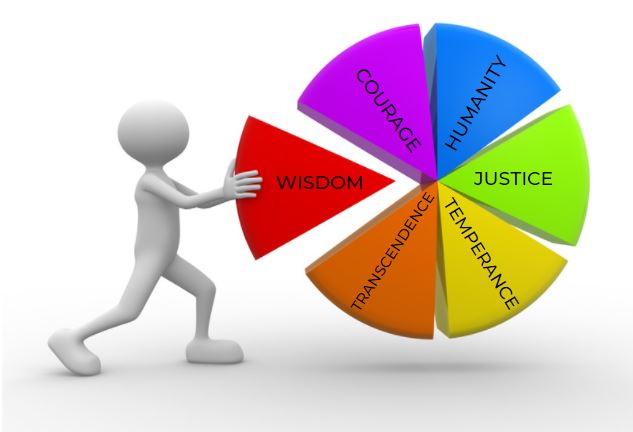
Positive psychology and classical philosophy provide complementary ways to categorize virtues. The VIA (Values in Action) classification identifies six core virtue categories:
-
Wisdom and Knowledge – cognitive strengths that entail acquiring and using knowledge effectively, such as creativity, curiosity, and judgment.
-
Courage – emotional strengths that enable perseverance and integrity in the face of adversity.
-
Humanity – interpersonal strengths like love, kindness, and social intelligence.
-
Justice – civic strengths encompassing fairness, leadership, and teamwork.
-
Temperance – strengths that protect against excess, including self-regulation, prudence, and humility.
-
Transcendence – strengths that connect individuals to the larger universe, such as gratitude, hope, and spirituality.
This taxonomy allows individuals to identify, cultivate, and apply strengths in daily life, making the abstract notion of virtue practical and actionable.
Virtues in Daily Life: Practical Applications
The cultivation of virtues is not merely theoretical; it manifests in everyday behavior. Practices such as expressing gratitude, demonstrating patience, or engaging in acts of service reinforce both personal and collective well-being.
For example, consistently showing compassion strengthens social bonds, increases empathy, and enhances emotional regulation. Similarly, courage in confronting ethical dilemmas fosters self-respect and credibility. By integrating virtues into routine decision-making, individuals create environments that support flourishing—for themselves and others.
Habituation and Deliberate Practice
Virtues are developed through repeated practice and reflection. Aristotle described this process as habituation: by consistently acting in accordance with virtue, individuals internalize these qualities, making them habitual responses rather than forced choices. Positive psychology emphasizes intentional interventions such as daily gratitude journals, mindfulness exercises, and goal-setting aligned with personal values, which reinforce virtuous behavior.
Social and Cultural Dimensions of Virtue
Virtues are inherently social. They guide how individuals interact with family, community, and society at large. Acts of justice, fairness, and kindness foster trust, cooperation, and cohesion. Conversely, the absence of virtues—dishonesty, cruelty, or greed—erodes relationships and societal structures.
Cultural norms shape the expression and prioritization of virtues. While kindness and fairness are valued globally, other strengths like humility, perseverance, or social intelligence may be emphasized differently depending on historical, religious, or societal context. Understanding these variations allows for a nuanced appreciation of how virtues function across cultures.
Virtues and Leadership
Leadership offers a clear example of virtues in practice. Ethical leaders who embody honesty, courage, and fairness inspire trust, motivate collective action, and create sustainable organizations. Research demonstrates that leadership effectiveness is more strongly predicted by integrity, empathy, and vision than by technical skill alone. Virtues thus operate at both individual and systemic levels, influencing outcomes far beyond personal satisfaction.
Challenges in Cultivating Virtues
Developing virtues is neither automatic nor effortless. It requires self-awareness, reflection, and the willingness to confront personal weaknesses. Modern society, with its emphasis on instant gratification and external rewards, can undermine the cultivation of enduring strengths.
Furthermore, balancing virtues may require careful judgment. Excessive courage without prudence may become recklessness; extreme generosity without temperance can lead to self-neglect. Virtuous living involves discernment, context-sensitivity, and continuous learning.
Virtues and Psychological Well-Being
Empirical studies link virtue cultivation with multiple dimensions of well-being. Gratitude predicts higher positive affect and life satisfaction; hope enhances resilience in adversity; self-regulation improves long-term health outcomes. By fostering virtues, individuals not only act morally but also enhance their emotional and psychological functioning.
Additionally, virtues interact synergistically. For example, combining empathy with self-regulation allows constructive responses to conflict, while integrating curiosity with courage promotes innovation and problem-solving. This holistic perspective underscores the role of virtues as integrative mechanisms for a flourishing life.
Virtues, Meaning, and Legacy
Virtues extend their impact across time and relationships. By living virtuously, individuals contribute to social stability, cultivate trust, and create legacies that endure beyond personal lifespans. Meaning is thus both inward- and outward-facing: it emerges from alignment with internal values and from tangible, positive effects on others.
Philosophical and psychological perspectives converge in emphasizing that fulfillment arises not from transient pleasures but from a sustained commitment to living well. Virtues anchor this commitment, providing direction, coherence, and a framework for purposeful action.
Cultivating Virtues in Contemporary Life
Practical strategies for developing virtues include:
-
Self-reflection: Regularly evaluate personal actions against moral and ethical standards.
-
Mindfulness and awareness: Recognize impulses, reactions, and habitual patterns that align or conflict with virtues.
-
Mentorship and role models: Observe and emulate individuals who exemplify virtuous living.
-
Deliberate practice: Engage in targeted activities to strengthen specific virtues, such as volunteering for kindness or journaling for gratitude.
-
Community engagement: Participate in groups and networks that reinforce ethical standards and shared values.
By integrating these practices into daily life, virtues move from abstract ideals to practical tools for achieving meaning and well-being.
Key Takeaways
-
Virtues are enduring character strengths that guide moral, emotional, and practical action.
-
They provide a foundation for meaning, fulfillment, and social cohesion.
-
Positive psychology identifies virtues as measurable character strengths with empirical links to well-being.
-
Cultivation of virtues involves habituation, reflection, and deliberate practice.
-
Virtues are context-sensitive; balance and discernment are necessary to avoid extremes.
-
Social and cultural environments influence how virtues are expressed and prioritized.
-
Virtuous behavior enhances relationships, leadership, and long-term satisfaction.
-
Living according to virtues fosters both internal fulfillment and external impact, creating a meaningful legacy.
Conclusion
Virtues serve as the cornerstone of a meaningful life. By cultivating courage, wisdom, compassion, and integrity, individuals align their actions with values, strengthen social bonds, and experience lasting fulfillment. Far beyond abstract moral theory, virtues function as practical, observable qualities that guide daily behavior and shape the trajectory of one’s life. Integrating virtue cultivation into personal, professional, and societal contexts transforms the pursuit of meaning from a philosophical ideal into a lived reality, demonstrating that character, not circumstance alone, defines a life well-lived.